If you take a look at Google Trends this week, you might notice an unusual phrase spiking in global search queries: “South Korea tungsten mining.”
For a country usually associated with K-pop, ultra-fast 5G networks, and the glittering skylines of Seoul, a sudden global obsession with a remote, mountainous village in Gangwon Province might seem like a glitch in the algorithm.
But it is no mistake. Deep beneath the quiet, pine-covered ridges of Yeongwol—a sleepy town hours away from the capital—lies a subterranean treasure that has suddenly transformed South Korea into a critical geopolitical flashpoint. Welcome to the Sangdong Mine. This is a place that once single-handedly built the modern Korean economy, was left for dead by global market forces, and has now staged a breathtaking 2026 revival that puts it at the absolute center of the bitter economic warfare between Washington and Beijing.
The Ghost of Han River’s Miracle: A Century of Blood, Sweat, and Tungsten
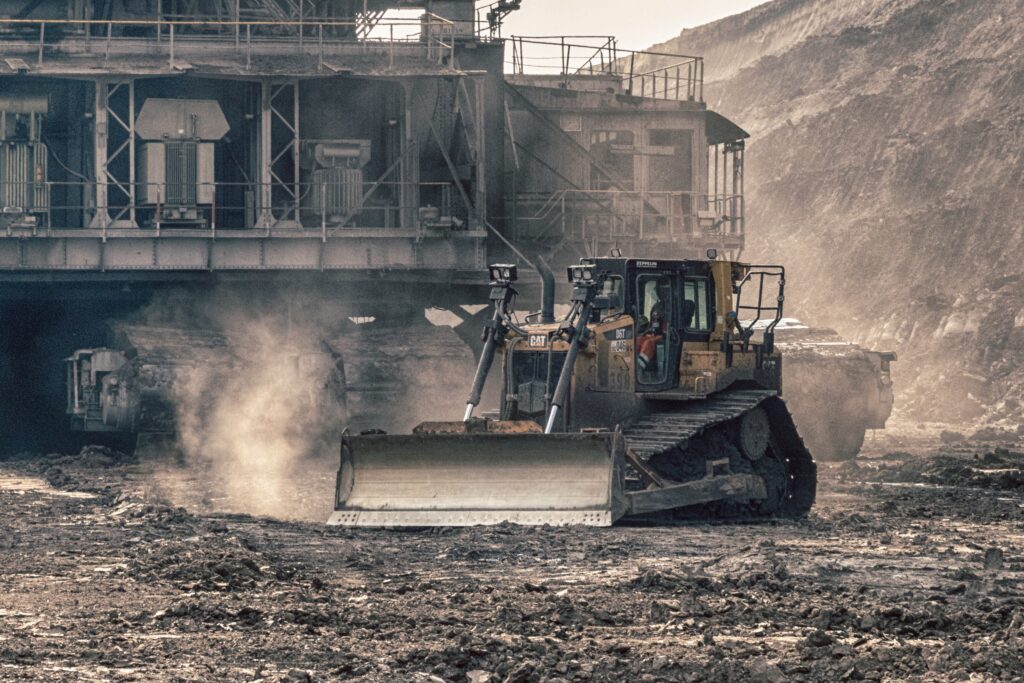
To understand why global tech giants and defense ministries are watching Yeongwol with bated breath, we have to look backward. Long before South Korea was a cultural superpower exporting sleek smartphones and award-winning cinema, it was a war-torn nation struggling for basic economic survival. And back then, its literal economic backbone wasn’t silicon—it was tungsten.
First discovered during the Japanese colonial era in 1916, the Sangdong Mine quickly revealed itself to be one of the largest and highest-grade tungsten deposits on the planet. Following the devastation of the Korean War in the 1950s, South Korea lacked capital, infrastructure, and heavy industry. What it did have, however, was Sangdong.
- The Ultimate Cash Cow: Throughout the 1950s and 1960s, tungsten extracted from Sangdong accounted for an astonishing 60% to 70% of South Korea’s entire total export revenue. The foreign currency generated by these subterranean miners literally bankrolled the early stages of the “Miracle on the Han River,” funding the highways, steel mills, and shipyards that laid the foundation for modern giants like Samsung and Hyundai.
- The 1994 Collapse: But the glory days didn’t last. In the late 1980s, China began opening its economy and flooded the global market with massive volumes of subsidized, incredibly cheap tungsten. Prices collapsed. Unable to compete with China’s predatory pricing, the operators of Sangdong officially turned off the lights and sealed the shafts in 1994.
For over three decades, Sangdong was a ghost town. Nature slowly reclaimed the entryways, the local economy evaporated, and the mine became a footnote in Korea’s economic history textbooks—a relic of a bygone, labor-intensive era.
The 2026 Rebirth: Breaking China’s Stranglehold on Tech and Defense
Fast forward to today. Why is the world suddenly panicking over tungsten, and why has Sangdong risen from the dead? The answer lies in the terrifying reality of the modern global supply chain.
Tungsten is not just another metal; it is a critical strategic asset. Boasting the highest melting point of any element (3,422°C) and a density rivaling gold, it is entirely irreplaceable. If you want to build a semiconductor manufacturing tool, a military missile, an armor-piercing artillery shell, an aerospace turbine, or an electric vehicle battery, you must have tungsten.
The problem? China currently controls roughly 85% of the world’s tungsten supply. As geopolitical tensions have escalated, Beijing has increasingly weaponized its dominance over critical earth minerals, tightening export quotas and implementing strict licensing regimes. For Western nations and advanced tech hubs like Seoul, this total dependence became an unacceptable security vulnerability.
| Metric / Dimension | Global Market Context (China Dominated) | The Sangdong Mine Impact (2026) |
| Estimated Ore Reserves | Concentrated heavily in subsidized Chinese provinces. | Approximately 58 million tons of exceptionally high-grade ore. |
| Production Lifecycle | Subject to sudden unilateral export restrictions by Beijing. | Commercial processing officially commenced in June 2026. |
| Supply Chain Independence | Monopolizes roughly 85% of global processing and extraction. | Projected to supply up to 40% of the entire non-Chinese global demand. |
Recognizing this immense strategic value, Almonty Industries, a prominent North American resource development firm, stepped in to acquire the mine’s extraction rights. Following years of aggressive deep-underground engineering and massive capital investment, the mine officially initiated its commercial processing plant operations in June 2026. This marked the official end of its 32-year slumber, positioning it squarely as a primary alternative supply line for the democratic world.
Is This Tragic Irony or Strategic Triumph for Korea?
If you read Western business publications, the narrative surrounding Sangdong is universally celebratory—a textbook victory for friend-shoring and supply chain resilience. But if you look closely at the internal dynamics within South Korea, the perspective is far more nuanced, tinged with a distinct sense of economic irony.
The hard truth that many international reports gloss over is a striking paradox: The mine sits in South Korean soil, but the mineral wealth does not belong to South Korea.
Because domestic conglomerates and successive governments repeatedly passed on buying back the mine during its long dormancy—dismissing it as economically unfeasible—the 100% ownership of the mining rights now rests in foreign corporate hands. To secure the massive upfront capital required to clear out the flooded tunnels and construct state-of-the-art automated crushing facilities, the foreign operators signed exclusive, long-term pre-purchase agreements with defense and tech supply chains directly tied to the United States.
Consequently, the lion’s share of the premium tungsten currently being pulled from the depths of Gangwon Province is legally bound for export across the Pacific. Adding to this irony is a stark domestic infrastructure gap: South Korea, despite being a global manufacturing powerhouse, currently lacks the specialized industrial-scale chemical processing plants required to refine raw tungsten ore into high-purity tungsten oxide—the exact form needed by local semiconductor giants like SK Hynix and Samsung Electronics. For the time being, Korea must watch its own historical resource leave its shores, only to potentially buy it back later in processed forms.
However, the story does not end there. Rather than conceding defeat, the regional government of Yeongwol and South Korea’s ministry of industry have launched an aggressive, multi-million dollar counter-offensive. Construction is currently underway on a dedicated, high-tech Critical Materials Industrial Complex directly adjacent to the mining zone. The goal is clear: build the necessary domestic refining facilities fast enough to intercept the raw materials locally, ensuring that South Korea can eventually process, utilize, and secure its own strategic slice of the Sangdong legacy.
For the residents of Yeongwol, the return of the miners has breathed vibrant new life into a community that was rapidly fading into demographic decline. But on a macro level, the roaring machines of the Sangdong Mine serve as a visceral, daily reminder of the complex, uncompromising nature of 21st-century resource diplomacy.
What Sangdong Teaches Us About the Future
As you walk through the bustling streets of Gangnam or look at the high-tech assembly lines in Suwon, it is easy to forget that the digital world is still fundamentally anchored to the physical earth. South Korea’s rise was built on heavy industry, sustained by chips and screens, and is now being challenged by a global scramble for the very soil beneath our feet.
The resurgence of the Sangdong Mine is more than just a nostalgic comeback story for an old mining town. It is a loud, clear signal of what the next decade looks like: a world where supply chains are weaponized, where geography is destiny, and where even the most advanced tech superpowers must reckon with the vulnerabilities of their raw materials.
For global readers watching the shifting balance of power between East and West, Yeongwol is no longer just a quiet weekend getaway spot in Gangwon Province. It is the new frontline. And for South Korea, the race is now on to ensure that this underground wealth benefits the nation that built its modern foundations on it in the first place.
Want a closer look inside the matrix?
- You can watch the real-time footage of the neon-blue tungsten veins inside the newly reopened shafts and the construction of the surrounding industrial complex in this local coverage by KBS News.
- More on Wikipedia https://en.wikipedia.org/wiki/Sangdong_mine
