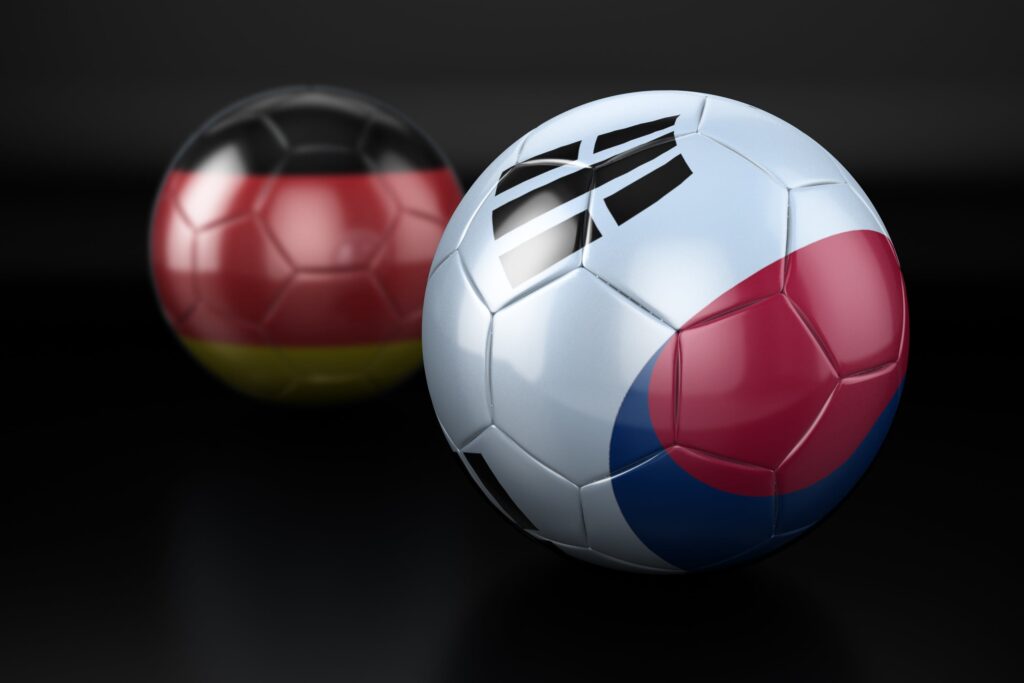
The 2026 FIFA World Cup is rapidly approaching its grand finale, leaving behind a trail of tactical revolutions, historic giant-killings, and the bittersweet passing of a generational torch across the pitches of the United States, Canada, and Mexico. For the global neutral fan, it has been an absolute masterclass in modern football.
But back in Seoul, the mood is exhausted, and fiercely critical.
For South Korean football fans, the 2026 World Cup will not be remembered for its on-pitch magic. It will be remembered as a disaster. Arriving in North America with what many experts called the most favorable group draw in recent history, the Korean Men’s National Team failed to cross the very first hurdle. They finished 34th overall, packed their bags after the group stage, and left a trail of public outrage in their wake.
Now, with former head coach Hong Myung-bo having stepped down in disgrace and a literal parliamentary hearing scheduled in Seoul, Korean football finds itself at a historical crossroads. How did a team blessed with generational talent fall so low while the rest of the world flew so high?
How the “Easy Group” Became a Nightmare
When the 2026 World Cup groups were drawn, Korean fans were relieved. Grouped with Mexico, the Czech Republic, and South Africa, Korea completely avoided soccer superpowers like France or Spain. Even the travel schedule between cities was perfect. On paper, making it to the Round of 32 looked easy.
And at first, the tournament actually gave everyone a burst of hope.
The Illusion of Prague: South Korea 2, Czech Republic 1
In the opening match, South Korea faced the Czech Republic. The team looked energetic, playing with a directness that caught the Europeans off guard. Korea secured a hard-fought 2-1 victory. The KFA (Korea Football Association) executives smiled in the VIP lounges, and fans dreamed. But looking back, this victory was a smokescreen. It masked deep structural flaws, a complete lack of tactical flexibility, and an over-reliance on individual brilliance rather than cohesive team chemistry.
The Technical Masterclass: Mexico 1, South Korea 0
The real trouble started in the second match against Mexico. Mexico was highly technical, controlled the ball well, and played in front of a massive crowd of their own fans. Coach Hong Myung-bo’s tactical weaknesses were completely exposed.
Korea’s midfield and attack looked completely disconnected. The creative “build-up football” the team had practiced for years was suddenly gone. Instead, Korea just threw long, predictable balls down the sides, hoping a winger would somehow beat three defenders. Mexico’s defense easily cut off these passes. Korea couldn’t even make a single shot on target during the second half. The match ended in a 0-1 loss, but honestly, Korea was completely outplayed.
The Humiliation: South Africa 1, South Korea 0
Even after losing to Mexico, Korea still had a chance. A clear win against South Africa in the final match would put them in the next round. South Africa was strong and disciplined, but on paper, Korea had much more international experience.
But what followed was a complete disaster. Coach Hong Myung-bo used the exact same lineup and the exact same rigid formation that failed against Mexico. There was no Plan B. When South Africa scored on a fast counter-attack in the first half, the Korean bench panicked.
Substitutions came way too late, and the players looked completely confused on the pitch. The game ended 0-1. South Korea, supposed to be a powerhouse of Asian football, was knocked out. They didn’t lose to a global superpower—they lost because they simply didn’t know how to break down a heavy defense.
The Hong Myung-bo Scandal—Why Fans Are Angry
To truly understand why the public reaction in Korea is so toxic right now, you have to realize that this failure didn’t start on the pitches of North America. It started months ago, inside the closed conference rooms of the Korea Football Association in Seoul.
A Broken Appointment Process
When the KFA appointed Hong Myung-bo as the national team manager, it triggered an immediate wave of skepticism. Fans and journalists pointed out that the selection process lacked transparency. There were highly qualified international coaches eager for the job, yet the KFA seemed determined to rush through a domestic appointment without following standard evaluation protocols.
Hong, who had previously stated he had no intention of leaving his club team in the middle of the K-League season, suddenly reversed his decision. This left domestic club fans feeling betrayed and the general public questioning the ethical integrity of the entire selection committee.
The Ghost of 2014
For older fans, this felt like an unwanted sequel to the 2014 World Cup in Brazil, where Hong Myung-bo had also managed the national team. That campaign ended in a similarly miserable group-stage exit, heavily criticized for favoritism in player selection and a stubborn refusal to adapt tactically.
History didn’t just repeat itself in 2026; it amplified. Throughout the 2026 group stage, Hong’s press conferences grew increasingly defensive. When asked about the lack of creative midfield play, his answers were vague, often shifting the blame to a lack of preparation time or player execution rather than acknowledging his own tactical rigidity.
The Mexican Resignation and the July 22nd Hearing
The end came swiftly. On June 29th, standing in a hotel lobby in Mexico before the team even boarded their flight back to Seoul, Hong Myung-bo officially announced his resignation. He apologized to the nation, stating he took “full responsibility” for the failure.
But in 2026, a simple resignation letter is no longer enough to quiet the storm.
The anger has moved from internet forums to the halls of government. The National Assembly’s Culture, Sports, and Tourism Committee has officially summoned Hong Myung-bo, alongside KFA President Chung Mong-gyu, to appear at a formal parliamentary hearing on July 22nd.
This is an unprecedented moment in Korean sports history. A football manager is being hauled before lawmakers not just because he lost a few soccer matches, but because the public demands an investigation into structural corruption, lack of institutional accountability, and the mismanagement of national pride. Hong has stated he will attend and face the questions directly. July 22nd promises to be a day of intense national scrutiny.
The Global Landscape—While Korea Stood Still, the World Evolved
The most painful part of South Korea’s early exit is watching what is happening in the rest of the tournament. As the World Cup progresses through the quarter-finals and into the semi-finals, it highlights just how far behind Korea has fallen in terms of modern football trends.
The 2026 tournament has been a masterclass in tactical flexibility, high-pressing systems, and rapid transition play—the exact opposite of Korea’s sluggish performance.
1. The Nightmare of the Hosts (The North American Collapse)
If it makes Korean fans feel any better, the host nations haven’t had a great time either. In a stunning turn of events, the United States, Mexico, and Canada were all wiped out by the Round of 16. Despite the massive advantage of playing on home soil with raucous crowds behind them, all three North American teams struggled against organized, tactically disciplined opposition from South America and Europe. This proved that in modern football, emotion and home-field advantage mean nothing if your tactical foundation is weak.
2. The Fall of the South American and Iberian Giants
This World Cup has also been unkind to traditional heavyweights. The biggest shockwaves of the tournament came when Brazil, the eternal favorites, were dumped out in the Round of 16 by a highly organized, counter-attacking Norway side.
Similarly, Portugal’s golden generation faced a heartbreaking exit. In what was almost certainly Cristiano Ronaldo’s final World Cup appearance, Portugal was outsmarted and outplayed by a relentless Spanish side. These departures proved to the world that names on a jersey do not win matches anymore; data-driven tactics and collective work rates do.
3. The Galactic Semifinal: Mbappe’s France vs. Messi’s Argentina?
While the giants fell, the true titans stabilized. France has cruised into the semifinals, propelled by a terrifyingly dominant Kylian Mbappe, who currently sits atop the tournament scoring charts with 7 goals in 5 matches. France plays a brand of football that is frighteningly efficient—lightning-fast counter-attacks combined with an impenetrable defensive block.
On the other side of the bracket, Argentina continues to defy logic. Driven by a 39-year-old Lionel Messi, who is operating more as a deep-lying playmaker than a traditional forward, the defending champions have scratched and clawed their way into the final four. Global football fans are now salivating at the very real possibility of a 2022 final rematch: Mbappe versus Messi.
What Korean Football Must Learn
When you place South Korea’s campaign side-by-side with the global drama of the 2026 World Cup, the contrast is stark.
Teams like France and Spain succeed because they have established a clear national football philosophy. They invest in youth systems that teach tactical intelligence, adaptability, and high-speed decision-making. When they change managers, they do so based on rigorous data and stylistic fit, not old-school networking or administrative convenience.
South Korea went to North America relying on an outdated playbook from a decade ago, managed by an administration that chose comfort over competence. The players, many of whom perform brilliantly every week for top-tier clubs in Europe and Asia, were let down by a system that failed to give them the tactical tools required on the world stage.
- Official Website of Korea Football Association https://www.kfa.or.kr
The 2026 World Cup is over for South Korea, but the real match begins on July 22nd in the National Assembly. If Korean football wants to avoid another disaster four years from now, the conversation cannot just be about who the next coach will be. It must be about dismantling the outdated, opaque hierarchy within the KFA and rebuilding a modern, transparent system from the ground up. Until then, Korean fans will continue to watch the world’s greatest show from the sidelines.
