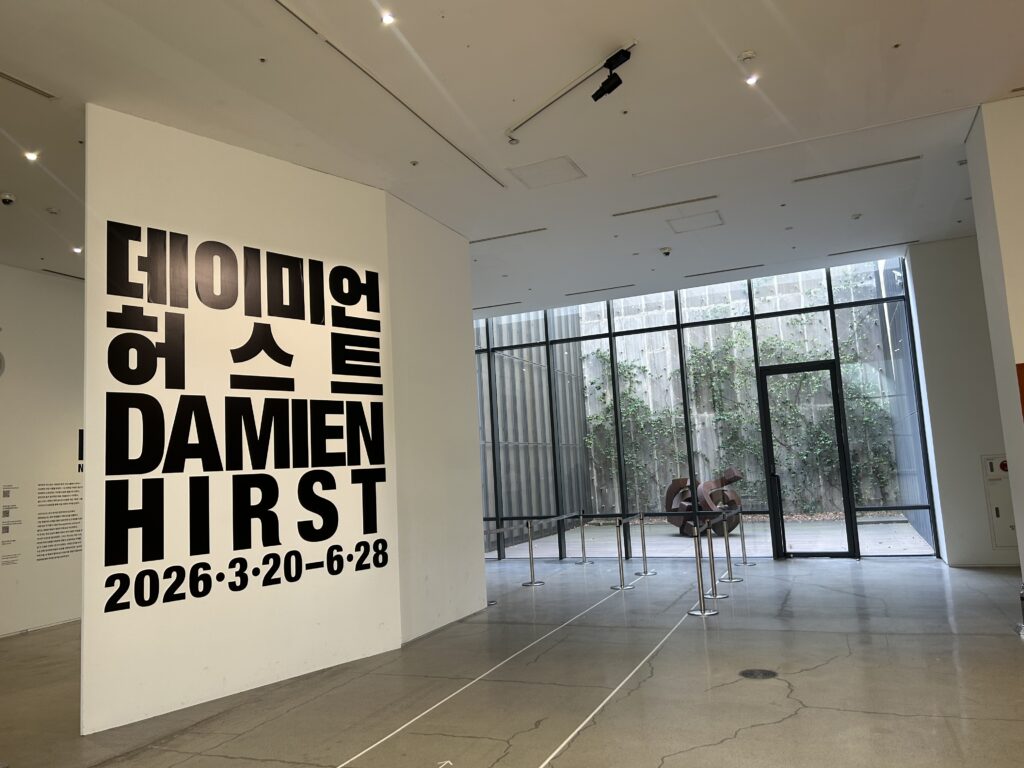
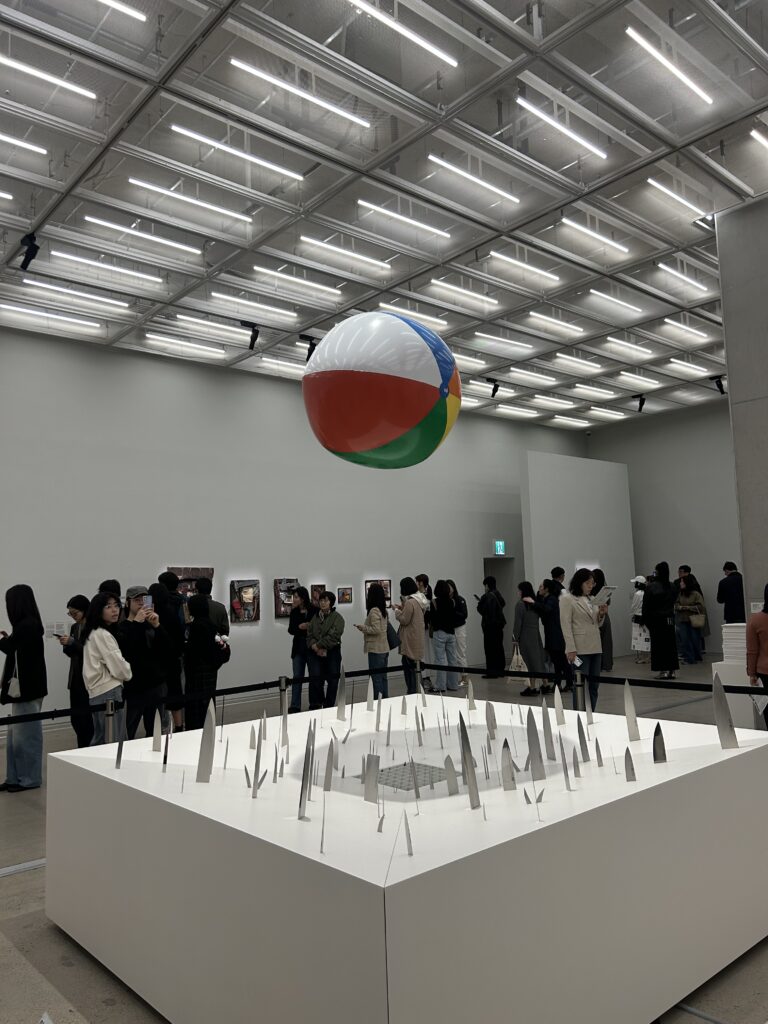
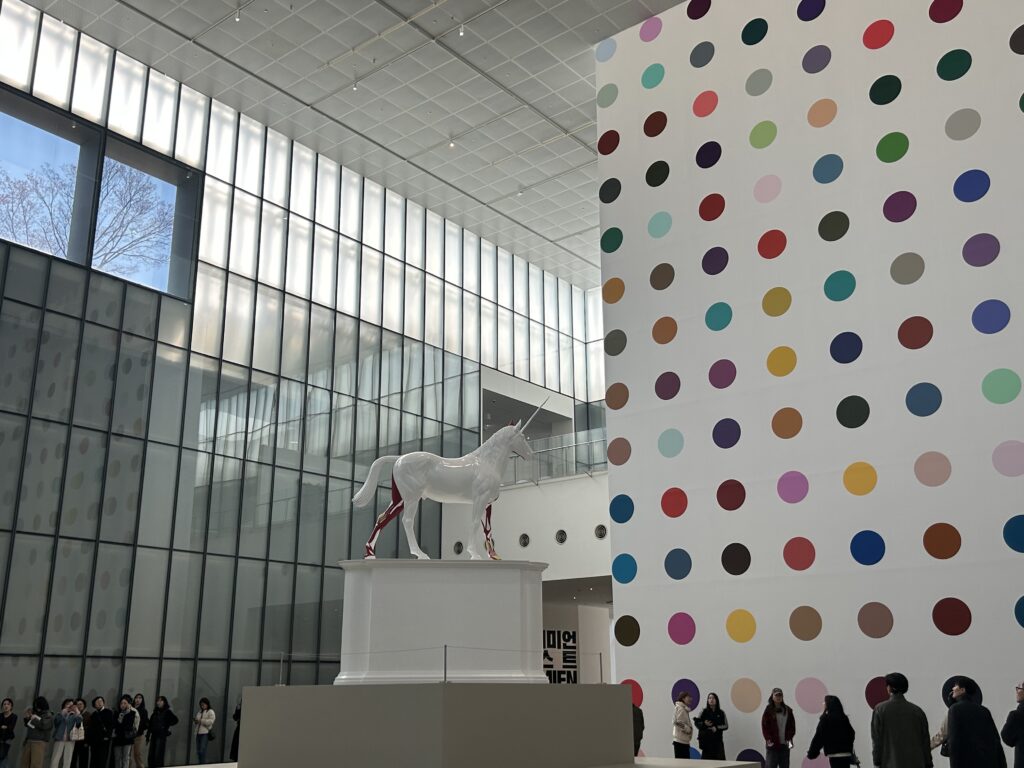
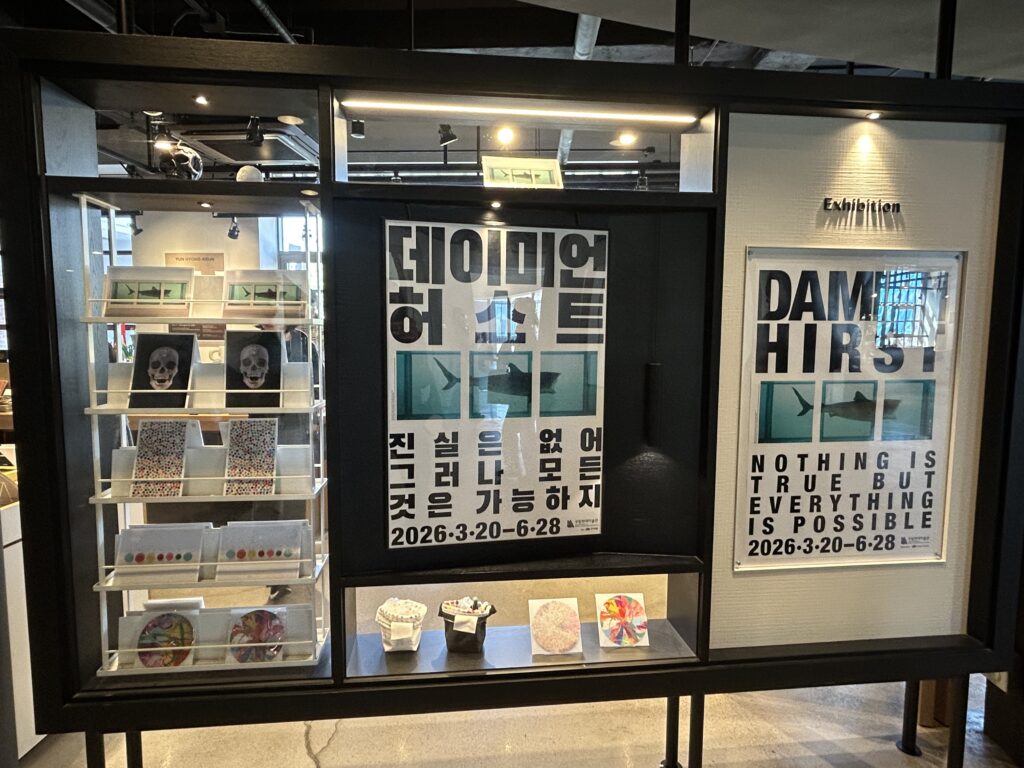
The quiet, historic stone walls of Samcheong-dong recently played host to a storm of controversy and genius. I stepped into the National Museum of Modern and Contemporary Art (MMCA) to witness the much-anticipated exhibition of Damien Hirst MMCA Seoul, a showcase that brings together the legendary masterpieces of Damien Hirst under the title, ‘There is No Truth, but Everything is Possible’ (March 20 – June 28, 2026).
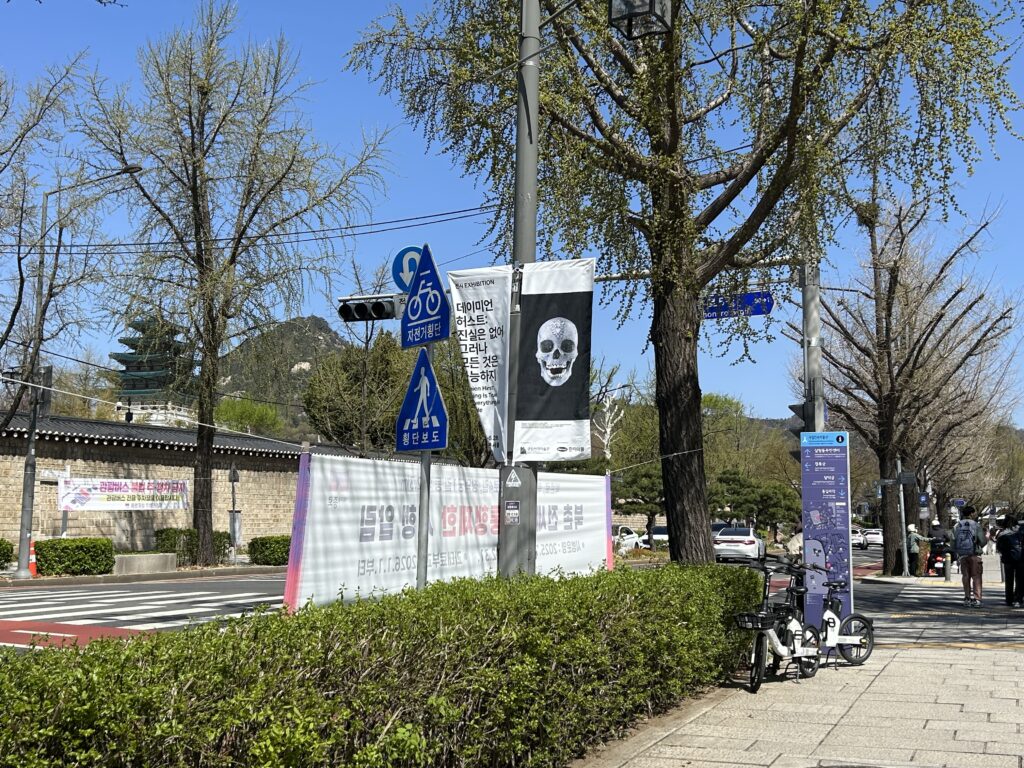
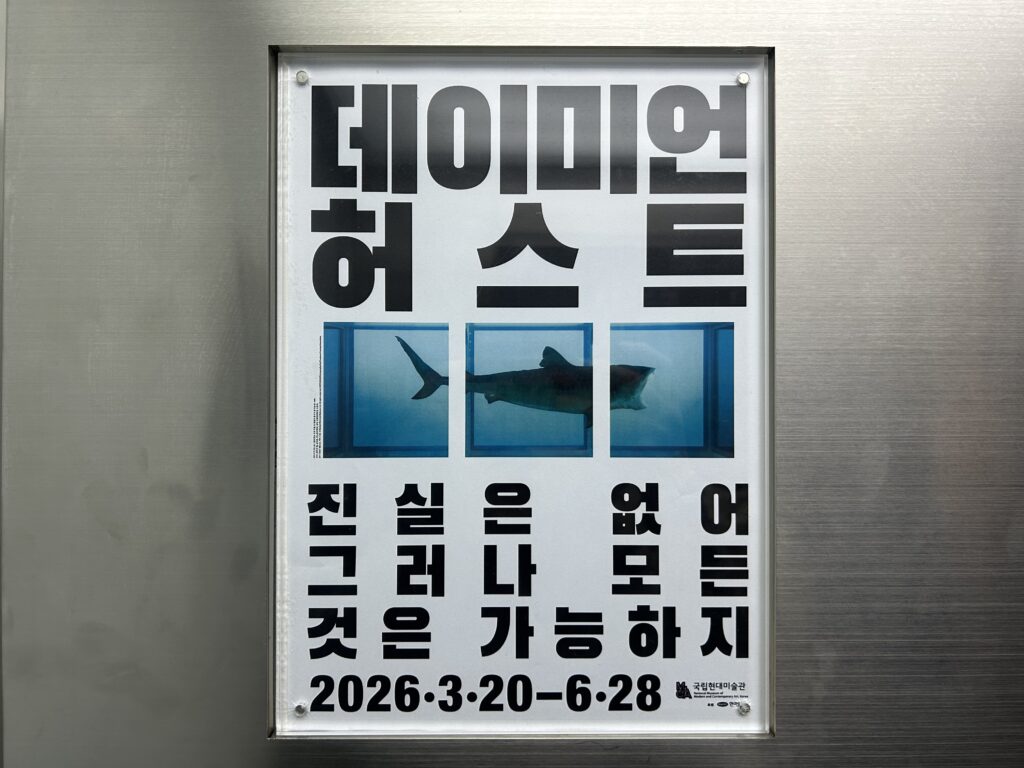
As Hirst’s first major solo museum show in Asia, the exhibition has been a lightning rod for debate since its announcement. In a city like Seoul—where we are constantly defining our status through luxury—Hirst’s work acts as a cold, sharp wake-up call. However, the conversation here goes beyond just “Art.”
The Ethics of Violence vs. Public Funding
The exhibition has faced fierce backlash from animal rights groups, specifically the “Association for Animals Killed by Damien Hirst.” They argue that “Art cannot be a name that exempts violence,” criticizing Hirst’s history of using live butterflies and maggots that perish as part of the installation process.
Adding to the fire is the debate over public funding. As a state-run institution funded by taxpayer money, the MMCA reportedly spent approximately 3 billion KRW (approx. $2.2 million) on this exhibition—primarily for the massive logistical feat of transporting and installing Hirst’s heavy, complex installations. This has sparked a heated national discussion: Should public funds be used to facilitate such controversial and ethically divisive art?
While I empathize with the concerns regarding animal ethics and the accountability of public institutions, I also recognize Hirst’s undeniable influence on the trajectory of contemporary art history. I have been eager to see this show since it was first whispered about in the Seoul art scene. I’ll keep my overall verdict quiet to allow future visitors to form their own “Truth.” Instead, I want to focus on the 6 Masterpieces of Damien Hirst that left the deepest impression on me—pieces that demand we look at the things we usually try to ignore: death, decay, and the price of beauty.
6 Masterpieces of Damien Hirst MMCA Seoul selected by TGE
1. The New Arrivals Blossom, 2019 (Oil on Canvas)
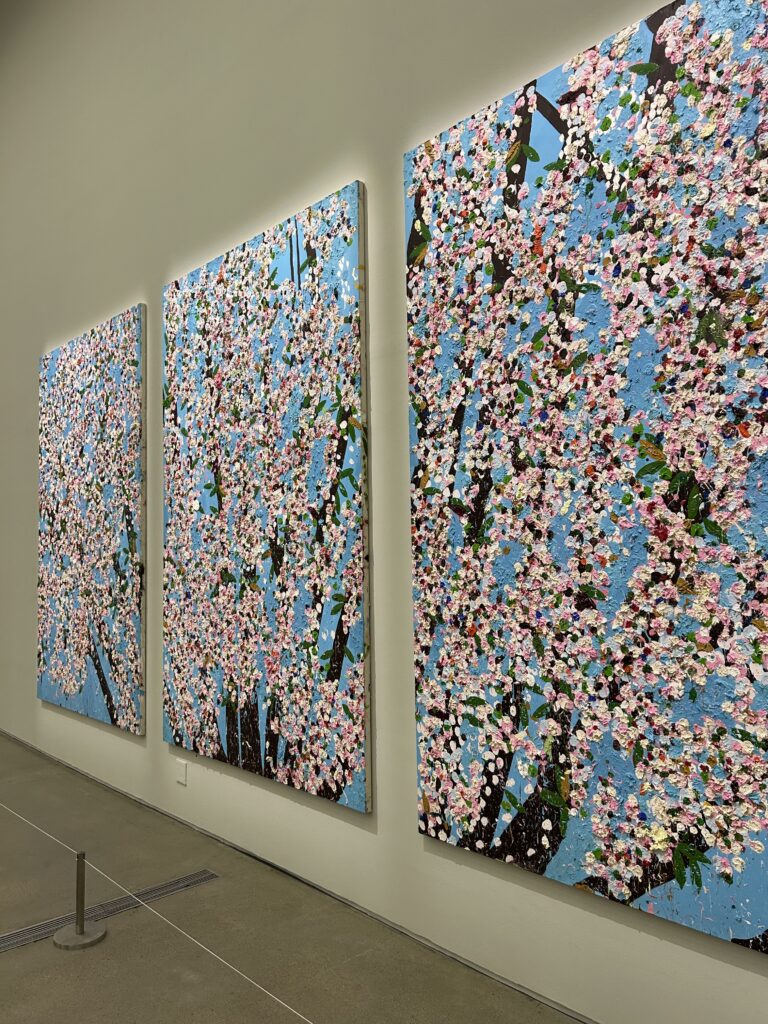
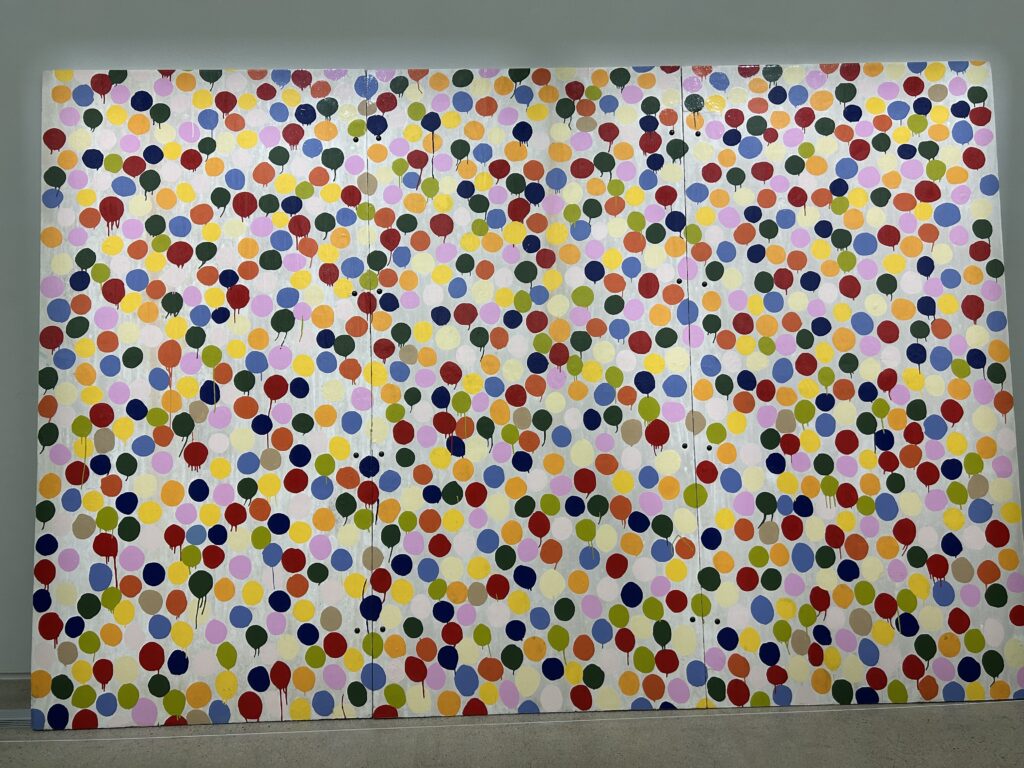
The first masterpiece of Damien Hirst, titled The New Arrivals Blossom, belongs to the “Cherry Blossoms” series unveiled in 2019. It reflects a period when Damien Hirst spent three years secluded in his studio, immersing himself in the pure, tactile joy of brushwork. He found a profound meaning in cherry blossoms—a subject that erupts with intense vitality and beauty only to disappear in a fleeting moment. For Hirst, these blossoms serve as a poignant metaphor for the intersection of life and death, beauty and desire.
The moment I stood before this massive canvas, I was struck by two distinct waves of surprise. First, it was a complete departure from the “Damien Hirst” I thought I knew—there was none of the provocative focus on death that usually defines his work. Second, I was simply overwhelmed by how breathtakingly beautiful his painting was.
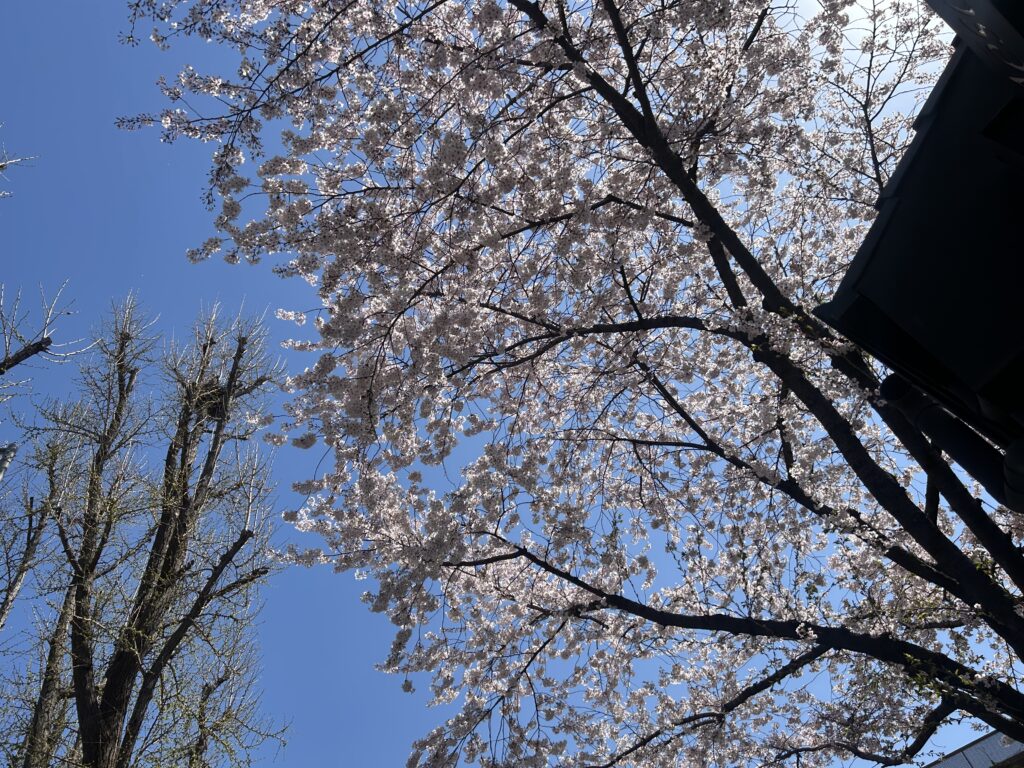
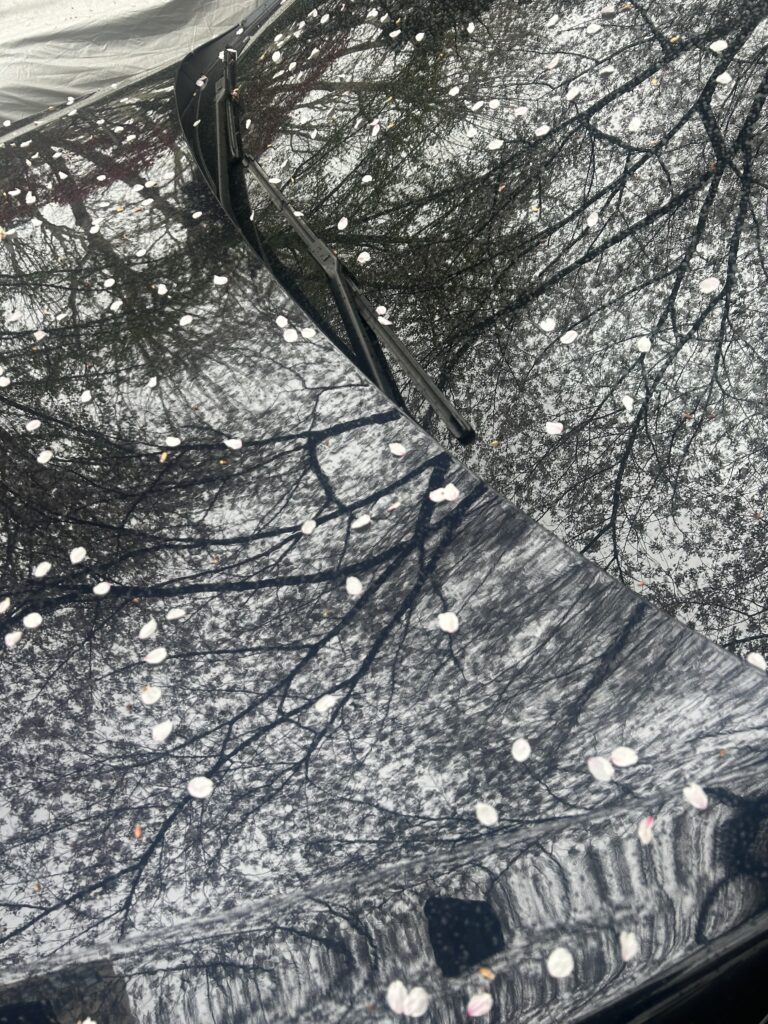
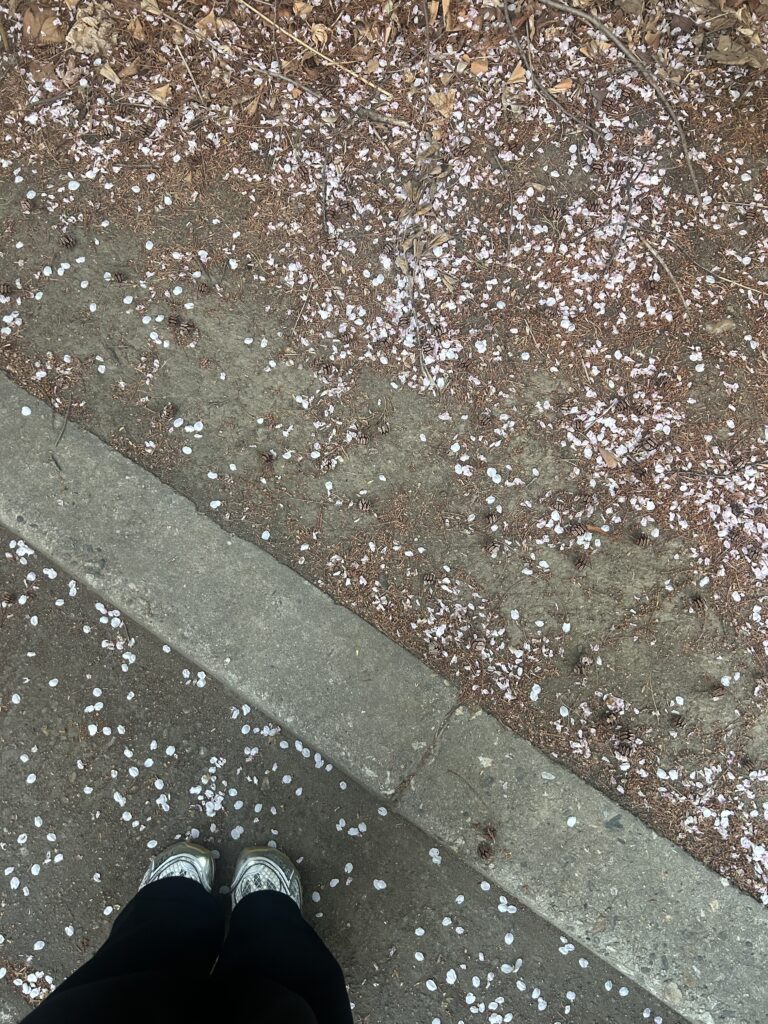
This piece resonated with me so deeply because, at this very moment in April 2026, the entirety of South Korea is draped in a sea of drifting cherry blossoms. Watching the real flowers fall so helplessly with a single gust of wind or a drop of rain, I had been feeling a sense of “Musang” (the transience of life)—and it seems the artist felt the same. The way he captured that frantic burst of life that fades almost as soon as it peaks left an indelible mark on my heart. The sheer scale and vibrancy of the work were nothing short of magnificent.
As I write this today, Seoul is experiencing heavy rain and wind, quite unlike a typical spring day. Watching the petals fall outside my window, I find my mind drifting back to Hirst’s blossoms. This painting perfectly represents the “Possibility” side of the exhibition title—capturing the messy, spontaneous, and joyful side of existence that persists, beautiful and defiant, despite its inevitable end.
2. Contemplating the Infinite Power and the Glory of God, 2008 (Butterflies and household gloss on canvas with gold leaf)
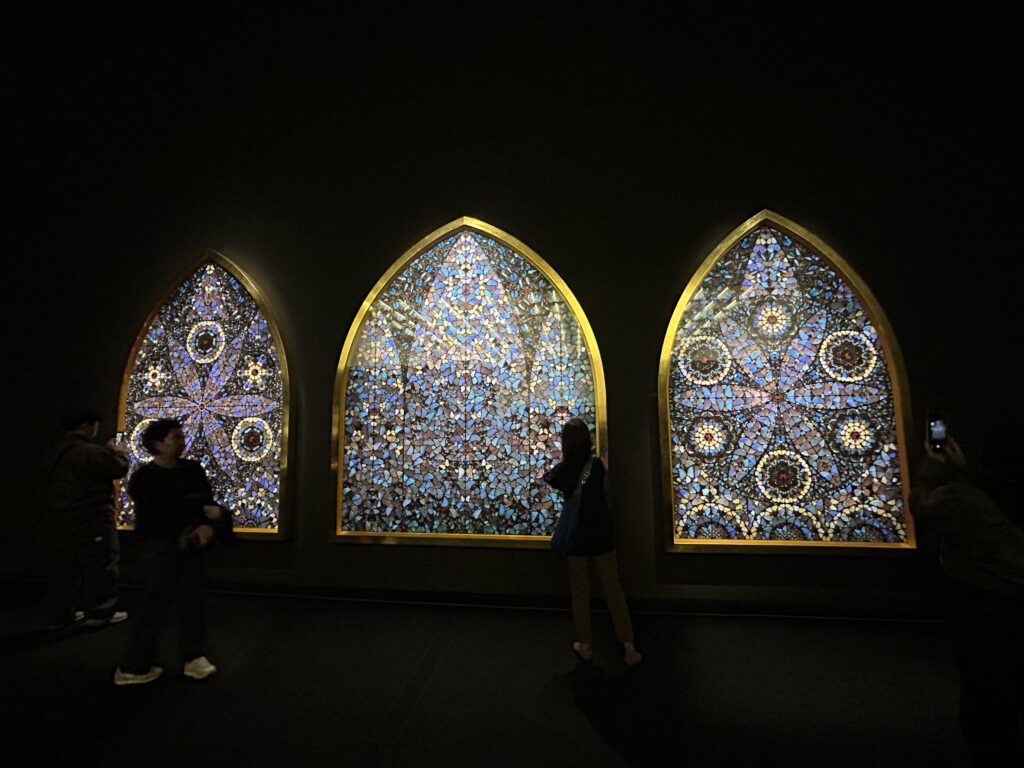
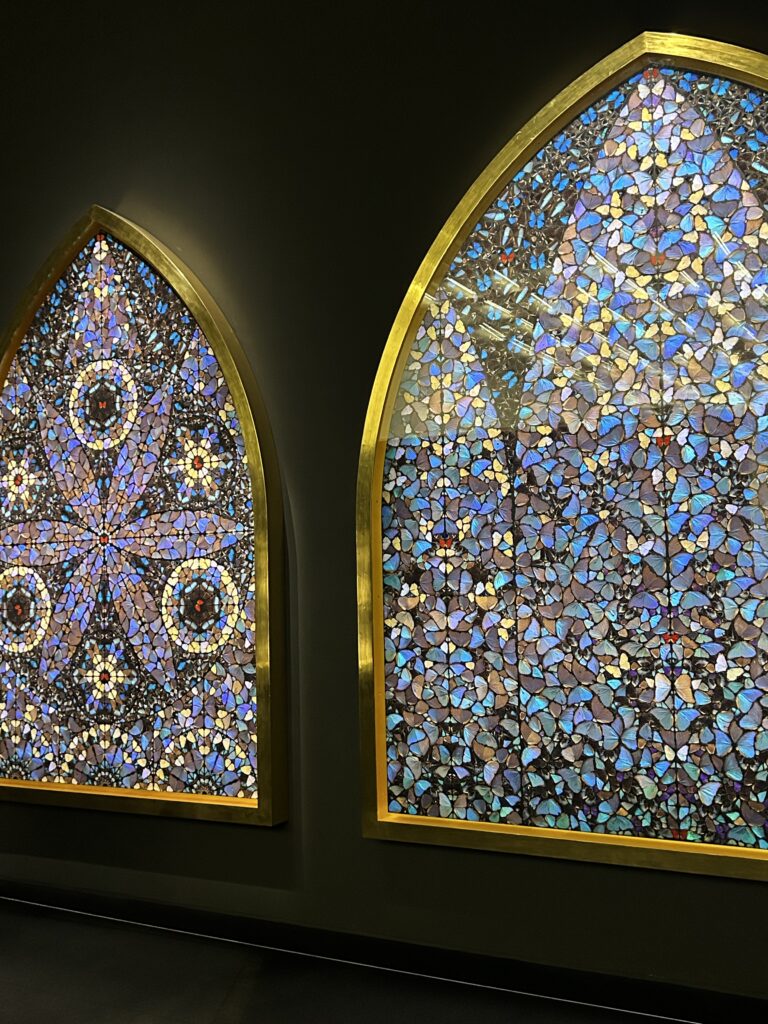
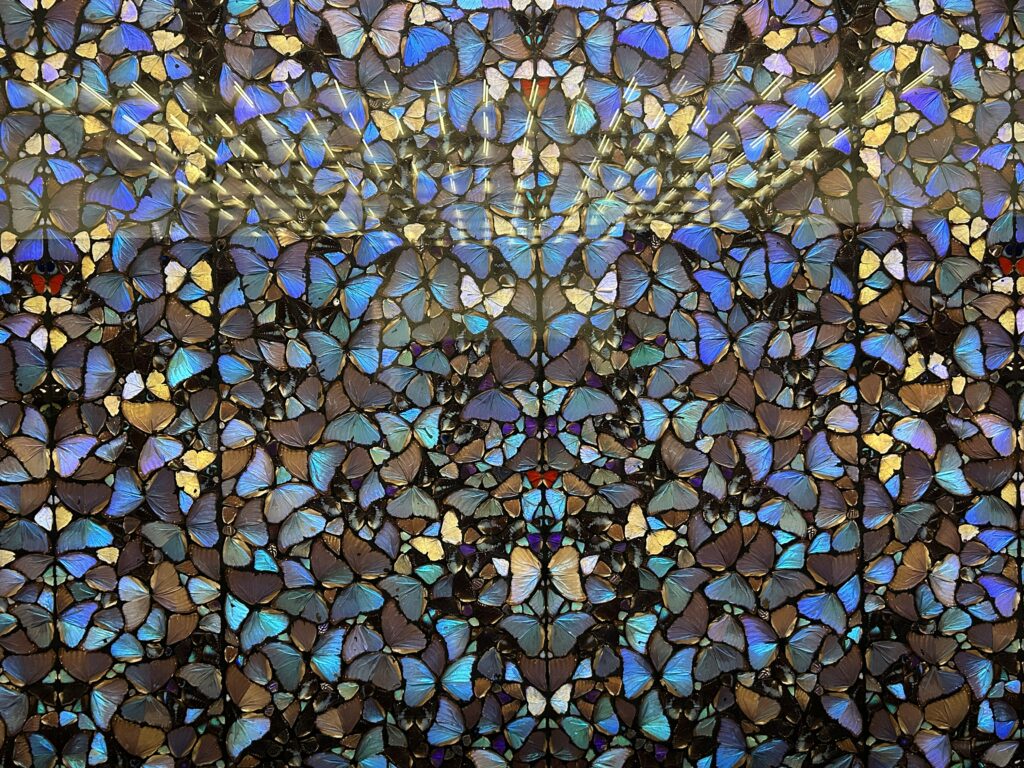
This triptych is a breathtaking recreation of medieval cathedral stained-glass, meticulously crafted using thousands of real butterfly wings. Damien Hirst has long been fascinated by butterflies, seeing them as symbols of the human soul and the concept of resurrection. From a distance, the work offers pure, kaleidoscopic beauty, but the moment you realize this radiant splendor is composed of countless wings that once belonged to living creatures, a profound sense of bewilderment and shock takes over. It is a strange, new emotion—confronting an aesthetic that is born entirely from the loss of life.
Since 2001, Hirst has arranged these wings into geometric, symmetrical patterns, creating a mesmerizing kaleidoscope that serves as a metaphor for human desire and the inherent fragility of life. Behind the sacred beauty inspired by medieval cathedrals lies the grim reality of dead biological fragments. I found myself wondering: how many butterflies are encased within this frame, unable to rest, forever displaying their remains to the passing crowds?
I stood there for a long time, staring at the wings that looked exactly like the blue butterfly emoji on my iPhone. Up close, the “Instagrammable” brilliance of the facade felt even more fragile. It is perhaps the most perfect metaphor for our modern existence—a stunning, curated exterior built upon something fleeting, delicate, and ultimately, gone.
3. Saint Bartholomew, Exquisite Pain, 2007 (Silver)
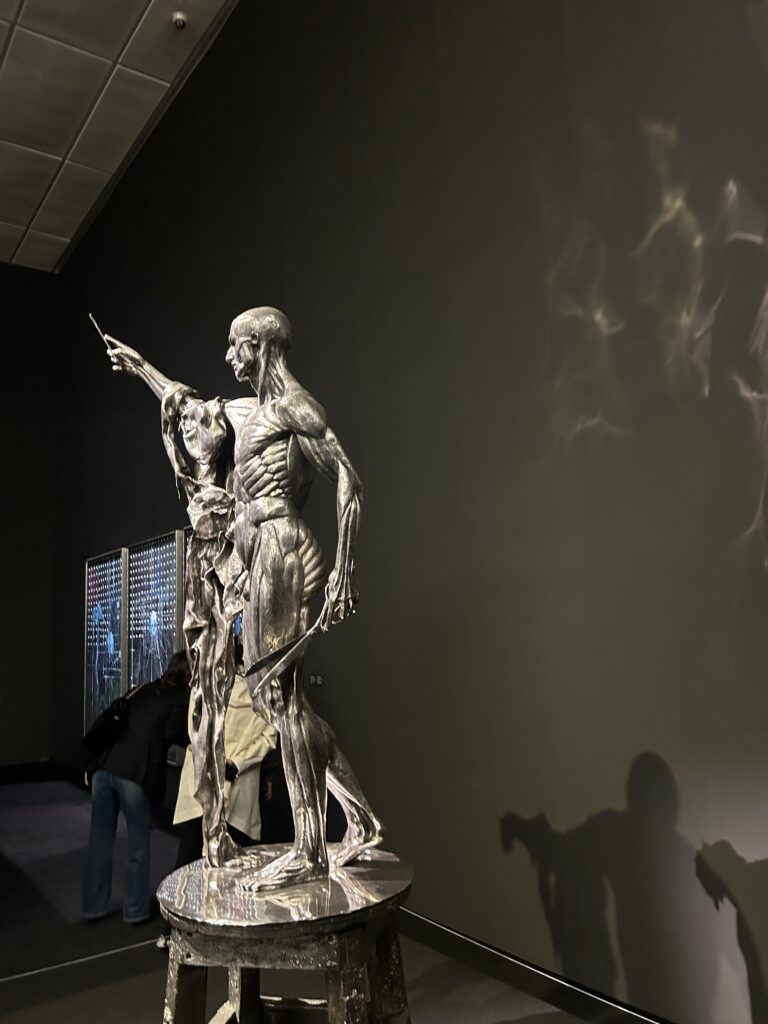
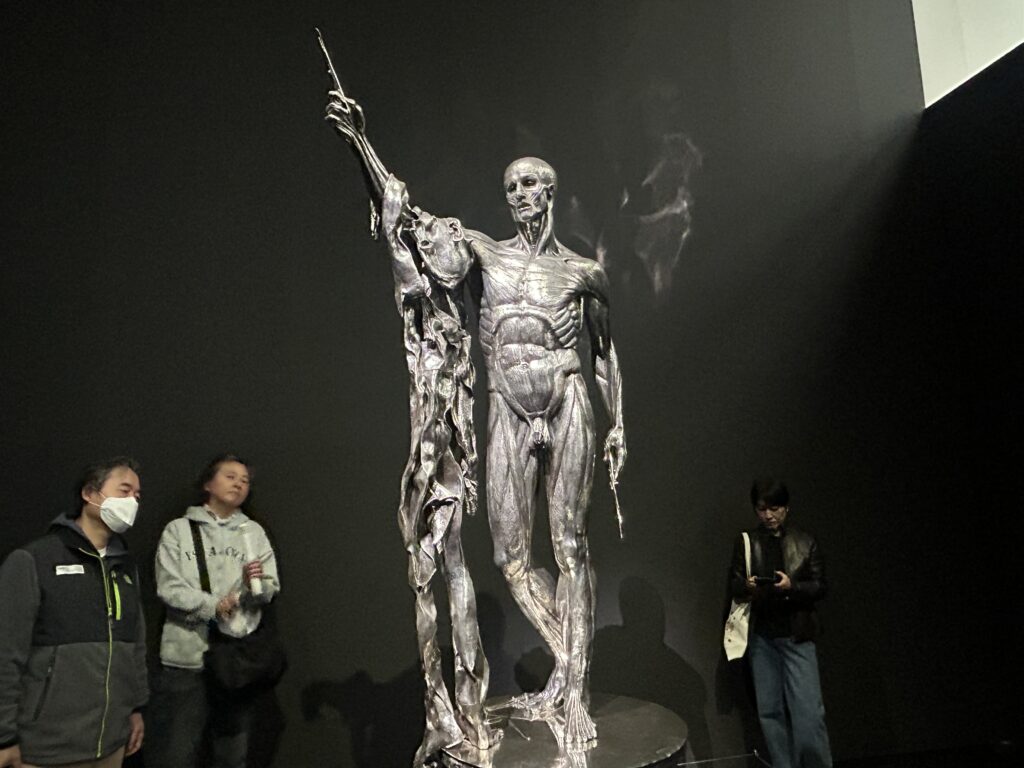
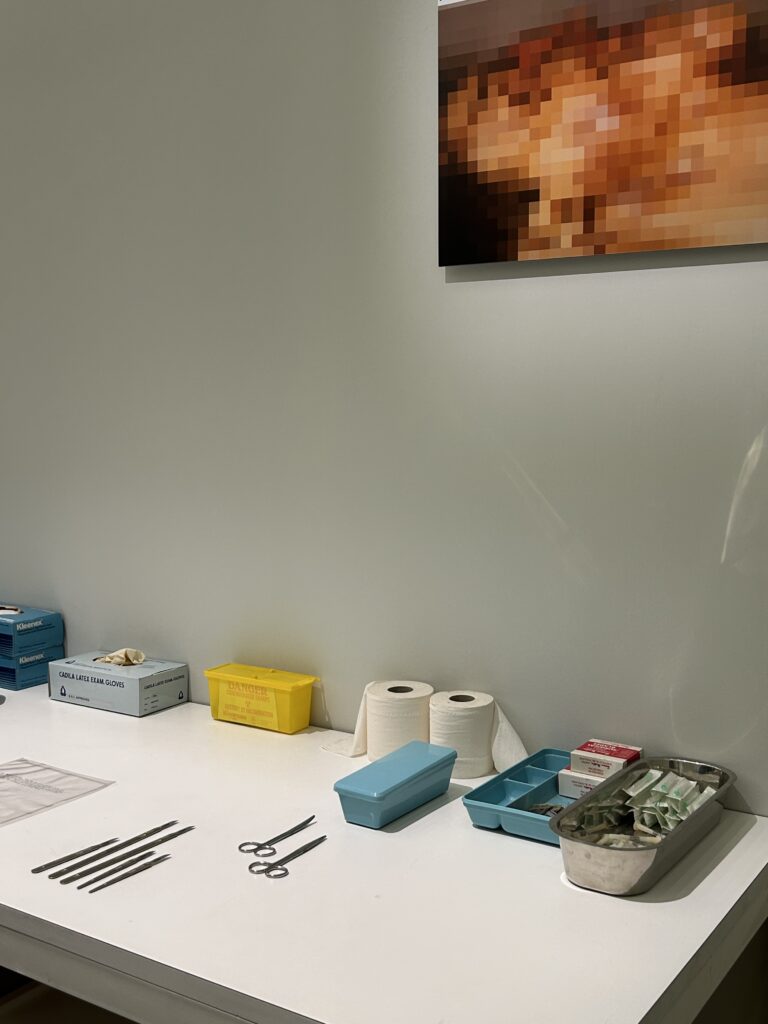
Damien Hirst, who grew up in a Catholic household, was deeply influenced by the eerie and visceral religious imagery he encountered as a child. This piece depicts Saint Bartholomew, one of the twelve apostles who is said to have been flayed alive. In this silver rendition, the saint stands before us with his own skin draped over his arm like a cloak, calmly holding the very tools of dissection—scalpels and scissors—in both hands.
What struck me most was the peculiar sense of tranquility on the saint’s face, a stark contrast to the excruciating pain of being skinned. Beyond the emotion, the anatomical detail of the muscles and bone structure revealed after the skin is removed was nothing short of astonishing. As this exhibition is the largest of its kind in Asia, it featured many unexpected pieces outside of Hirst’s most famous works, but this specific sculpture—standing at the strange intersection of religion, science, and art—left the most lasting imprint on my mind.
Looking at him holding those scalpels, I couldn’t help but wonder: did Saint Bartholomew flay his own skin? If so, what kind of perceived sin or “wrongness” could have been so great that he felt the need to inflict such a horrific punishment upon himself?
Standing in front of that shimmering silver statue, I was haunted by the silent question of what we are willing to strip away from ourselves to reach a state of perceived truth or atonement.
4. For the Love of God, 2007 (Platinum, diamonds and human teeth)
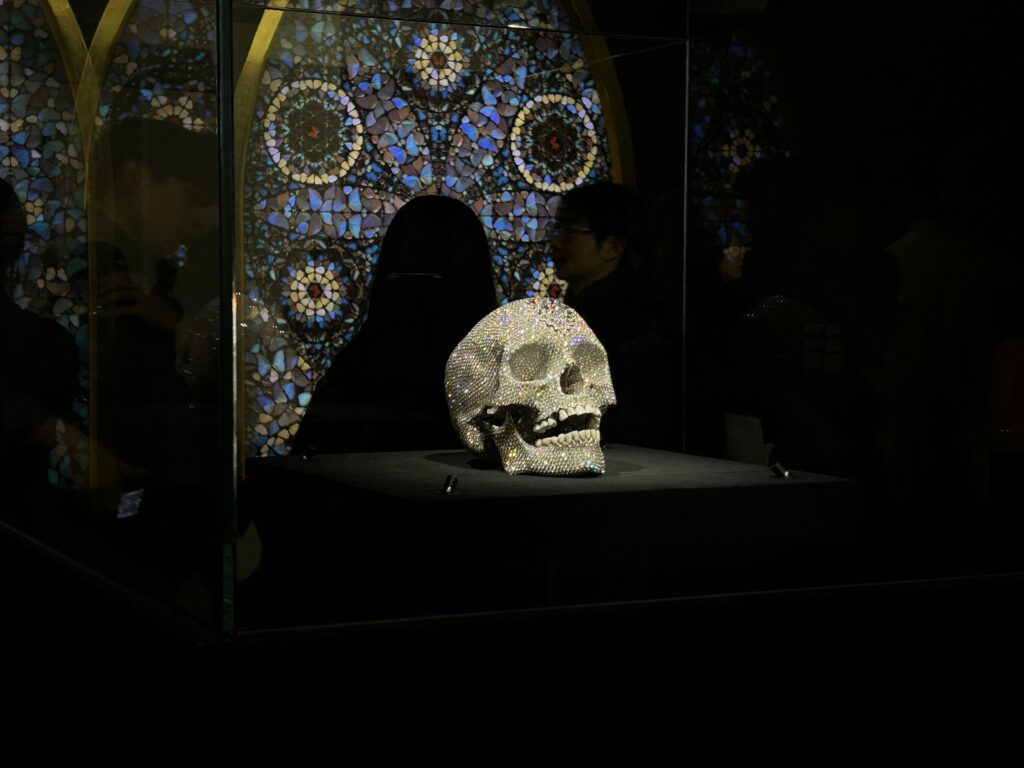
This is perhaps Damien Hirst’s most iconic and controversial masterpiece—the very work that ignited fierce criticism for being “too commercial” or for “playing a prank” on the art world. It is a life-sized cast of an 18th-century human skull, forged in platinum and encrusted with a staggering 8,601 flawless diamonds. The teeth, however, are real, belonging to the original skull used for the cast. The combination of diamonds, the ultimate symbol of eternal beauty, and the skull, the definitive emblem of death, serves as a profound reflection on human desire and the transience of life. The title, For the Love of God, reportedly came from Hirst’s mother, who would exclaim, “For the love of God, what are you going to do next?” whenever he shared his radical new ideas.
Standing in its own dedicated, darkened space at the center of the gallery, the work felt every bit as provocative as its reputation suggests. It took me back to my college days, long before I truly knew who Damien Hirst was, when Alexander McQueen’s skull-print designs were the pinnacle of cool. From street style to high fashion, those skulls were everywhere. Looking back, the 2013 collaboration between McQueen and Hirst remains one of the most symbolic meetings between fashion and contemporary art. McQueen often cited Hirst’s Entomology series—where thousands of insects are arranged in geometric patterns to form skull shapes—as a direct inspiration. Both visionaries shared a fascination with the coexistence of death and beauty, turning a fashion item into a genuine piece of art.
In person, the skull was smaller than I had imagined, yet the diamonds sparkled with an intensity that felt almost aggressive. It is a masterpiece defined by irony: the diamonds suggest that something can last forever, while the skull reminds us that human life never does. Standing before this brilliant, morbid object, I found myself questioning the state of our existence—chasing endless desires (the diamonds) while being bound to our fragile mortality (the skull).
5. The Physical Impossibility of Death in the Mind of Someone Living, 1991(Glass, painted steel, silicon, monofilament, shark and formaldehyde solution)
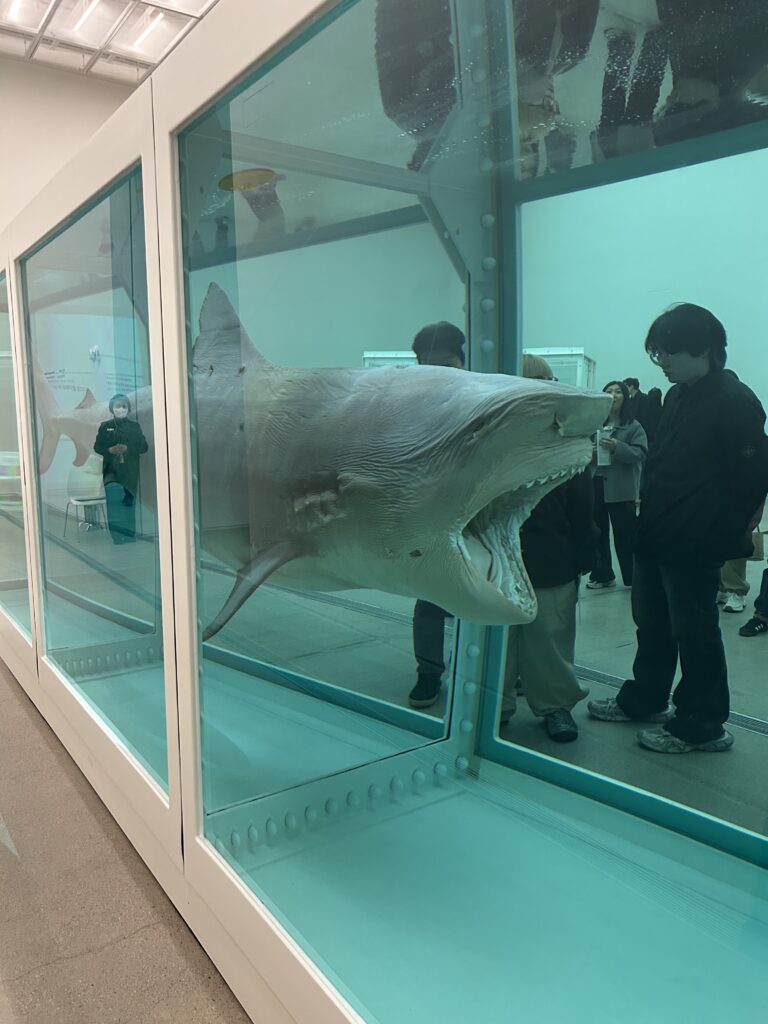
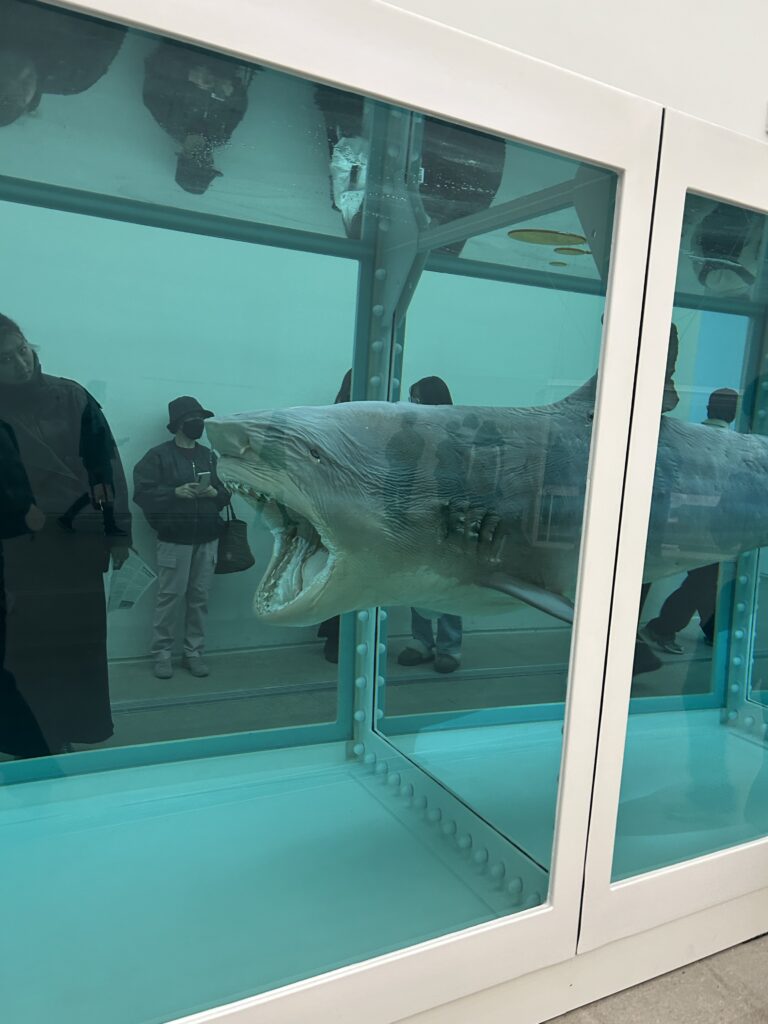
This installation, featuring a massive shark suspended in a glass tank filled with formaldehyde, is perhaps the most era-defining image of 20th-century art. It explores the profound paradox of human existence: while we live with the constant anxiety and fear of mortality, we are psychologically unable to truly comprehend the reality of death until it finally claims us. This work launched Hirst’s “Natural History” series—a collection of preserved animals, including the infamous bisected cow and calf, that solidified his status as a provocative icon of contemporary art. A curator at Tate Modern once described this piece as a “brutally contradictory work,” noting that it reveals the frantic denial of death deeply embedded in our culture.
The shark also became a symbol of the high-stakes art market when it was sold through the Gagosian Gallery to hedge-fund tycoon Steve Cohen for approximately 15.5 billion KRW (around $12 million), a figure that sent shockwaves through the global financial and art worlds.
Coming face-to-face with this shark, encased not in salty seawater but in a tank pungent with the clinical scent of formaldehyde, was an incredibly intense experience despite having seen the image countless times in media. With its jaws wide open, the shark looked alive that I felt a sudden pang of pity for the creature—as if it were being denied the peace of a natural death. It was in this moment that I truly understood Hirst’s mastery of contradiction: by making a dead thing appear alive, he forces us to confront our own fears and the illusions we build around life. It was a remarkable opportunity to stand before such a visceral icon of modern art.
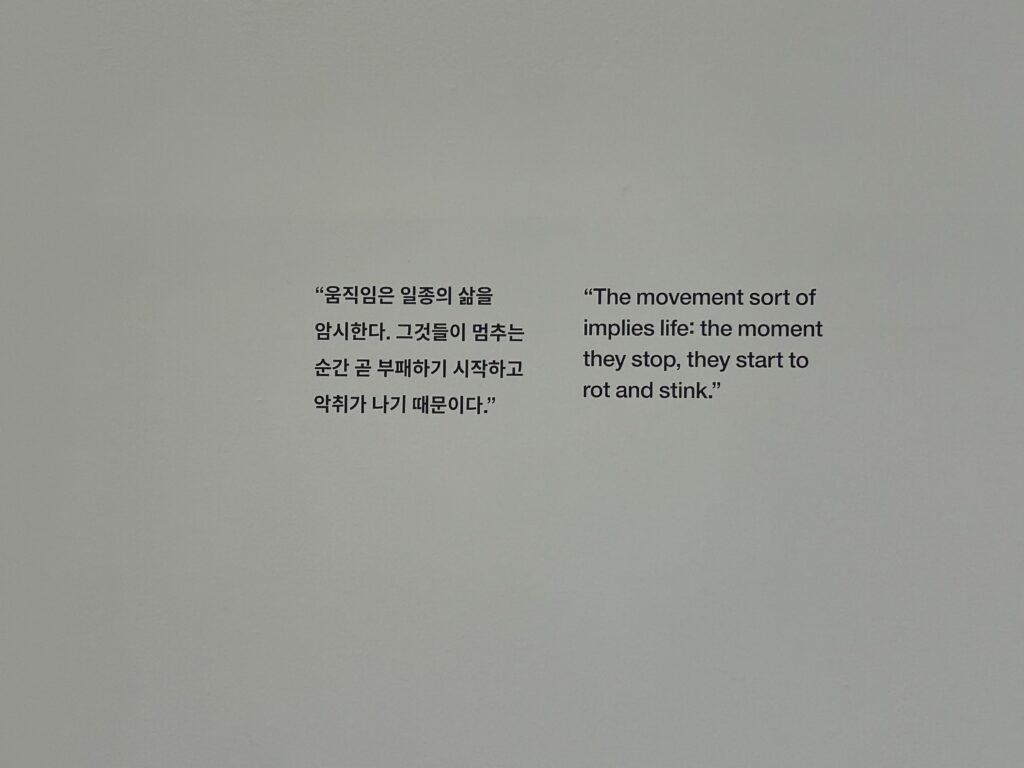
6. With Dead Head, 1991 (Photographic print on aluminum)
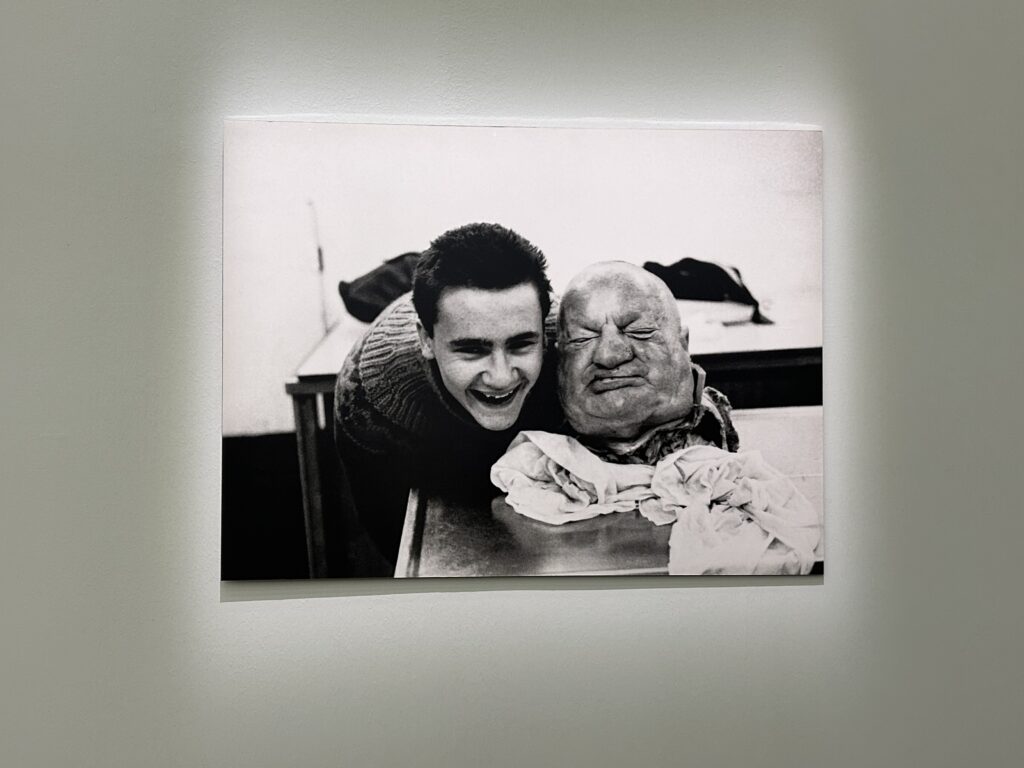
Unlike the previous sculptures and paintings, this work is a photograph. It was taken in 1991, but the image itself dates back ten years earlier, when Hirst was just sixteen. He had followed a friend studying microbiology to a mortuary in Leeds and took this photo secretly. Though he is grinning like a mischievous “enfant terrible” next to the severed head of a corpse, Hirst later confessed that he was actually terrified inside. By enlarging this decade-old photo for his first solo exhibition in 1991, he signaled to the world that his artistic universe was rooted in an obsession with, and a fear of, death.
What made this piece more striking to me than even his famous “Spot” or “Spin” paintings was the raw, simple power of the image. There is a profound irony in seeing the innocent, youthful smile of a sixteen-year-old—essentially a middle schooler in Korea—posed next to the distorted, enigmatic expression of a severed head. I found myself flooded with questions: Why was he smiling so brightly? Why did the corpse look so hauntingly strange? How was he even able to take such a photo?
This single frame serves as a chilling prologue to his entire career, like a prophetic dream of the work he would eventually produce. Because it perfectly encapsulates the origin of his gaze on mortality, I have chosen this photograph as the final piece on my list.
Leaving the dark, provocative halls of MMCA and stepping back into the afternoon sun of Samcheong-dong felt like waking up from a deep, philosophical dream. “There is No Truth, but Everything is Possible”—this title stayed with me as I walked past the traditional hanoks and modern boutiques.
Whether you love his work or find it morbid, Damien Hirst forces you to look at the world through a different lens. In the “Seoul Edit” of 2026, where we are all trying to find our own truths, perhaps the most important thing is simply to realize that everything is possible.

Quick Guide: 6 Must-See Masterpieces at MMCA Seoul
| No. | Title | Key Theme | TGE’s Insight |
| 1 | The New Arrivals Blossom | Transience of Life & Beauty | The fleeting “Musang” (무상) of Seoul’s April cherry blossoms. |
| 2 | Contemplating the Infinite Power… | Souls & Resurrection | A beautiful but chilling metaphor for the “Instagrammable” life. |
| 3 | Saint Bartholomew, Exquisite Pain | Religion, Science & Art | A haunting question of vulnerability: Why flay our own identities? |
| 4 | For the Love of God | Desire vs. Mortality | The “Final Boss” of luxury; an ironic meeting of diamonds and death. |
| 5 | The Physical Impossibility of Death… | Fear & The Paradox of Life | Facing the clinical reality of death through a preserved icon. |
| 6 | With Dead Head | Obsession & Origins | The eerie, prophetic prologue to Hirst’s lifelong gaze on mortality. |
Q. Who is Damien Hirst?
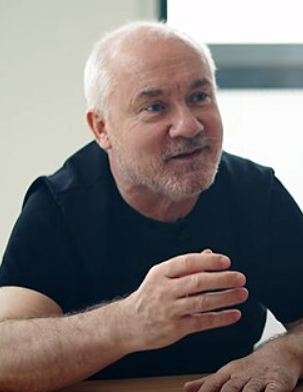
Born in Bristol in 1965 and raised in Leeds, Damien Hirst found his only escape from a rebellious youth through the freedom of drawing. His true ascent began at age 23 while studying at Goldsmiths, University of London, when he organized the legendary group exhibition Freeze (1988). Held in a derelict docklands warehouse, this self-produced show—funded by corporate sponsors and promoted with its own catalog—marked the birth of the YBA (Young British Artists) and forever altered the landscape of contemporary art.
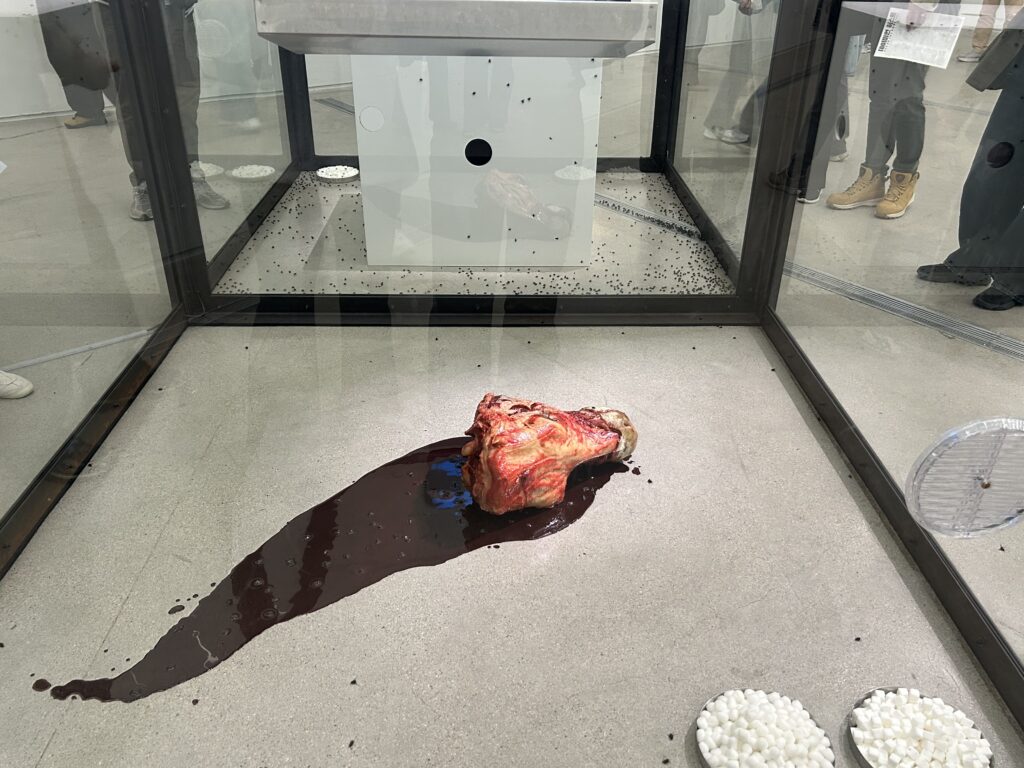
Hirst became a global sensation with provocative works like A Thousand Years (1990), which used a rotting cow’s head and maggots to depict the raw cycle of life, and his iconic shark installation, The Physical Impossibility of Death in the Mind of Someone Living (1991).
The Philosophy of Desire and Denial Hirst’s work centers on the complex web of human emotions regarding life and death. He suggests that our primal fear of mortality paradoxically fuels our obsession with eternal life, our blind faith in medicine and science, and our compulsive need to collect and control. He challenges us to look directly at the social structures—religion, science, art, and capital—that we treat as absolute truths. To Hirst, these may not be “the truth,” but they aren’t mere illusions either. This tension is where he asks us to reside.
A Rule-Breaker and Cultural Architect What makes Hirst truly unique is his refusal to stay within the traditional boundaries of an “artist.” He has actively reshaped the entire art ecosystem—from opening concept restaurants to bypassing galleries to sell his work directly through auction houses. Simultaneously, he acts as a patron and curator; his Newport Street Gallery in London houses thousands of works, from masters like Francis Bacon and Andy Warhol to emerging young artists, all accessible to the public for free.
As the first major large-scale solo exhibition in Asia, this MMCA show provides a comprehensive 35-year overview of Hirst’s journey. By questioning every value we hold dear and expanding the limits of art, he leaves us with one hauntingly beautiful mantra:
“There is No Truth, but Everything is Possible.”
Source: National Museum of Modern and Contemporary Art (MMCA), Seoul
https://en.wikipedia.org/wiki/Damien_Hirst
Pro-Tips for Visiting the Exhibition
As this is a rare showcase of a global contemporary art master, the museum attracts a significant crowd. To ensure the best experience, here are a few insider tips:
- Master the “Open Run”: Given the immense popularity of the show, I highly recommend booking your tickets in advance via the official MMCA website or Naver Booking. To avoid the heavy afternoon crowds and truly immerse yourself in the art, aim for an “Open Run” (arriving right as the museum opens).
- Books your Tickers:
- MMCA Official Website [https://booking.mmca.go.kr/product/en/performance/490]
- Secure Your Brochure Early: The exhibition brochures contain essential context that deeply enriches the viewing experience, but they tend to run out quickly. Make sure to grab one at the ticket booth or immediately upon entering the gallery to help guide your journey.
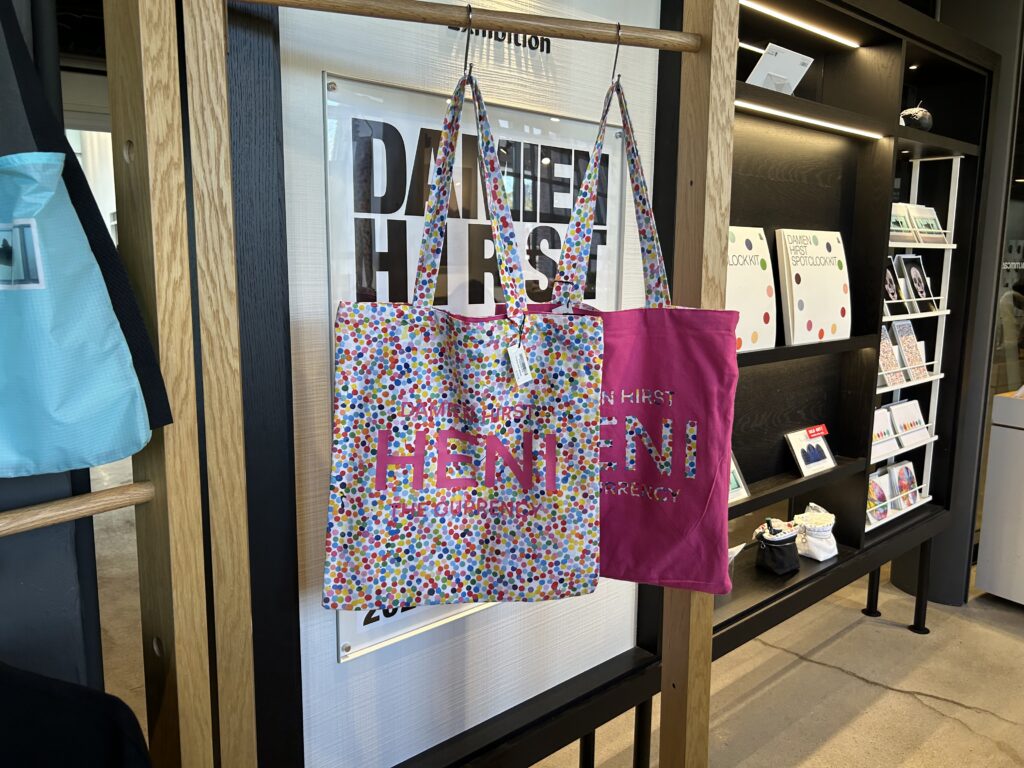
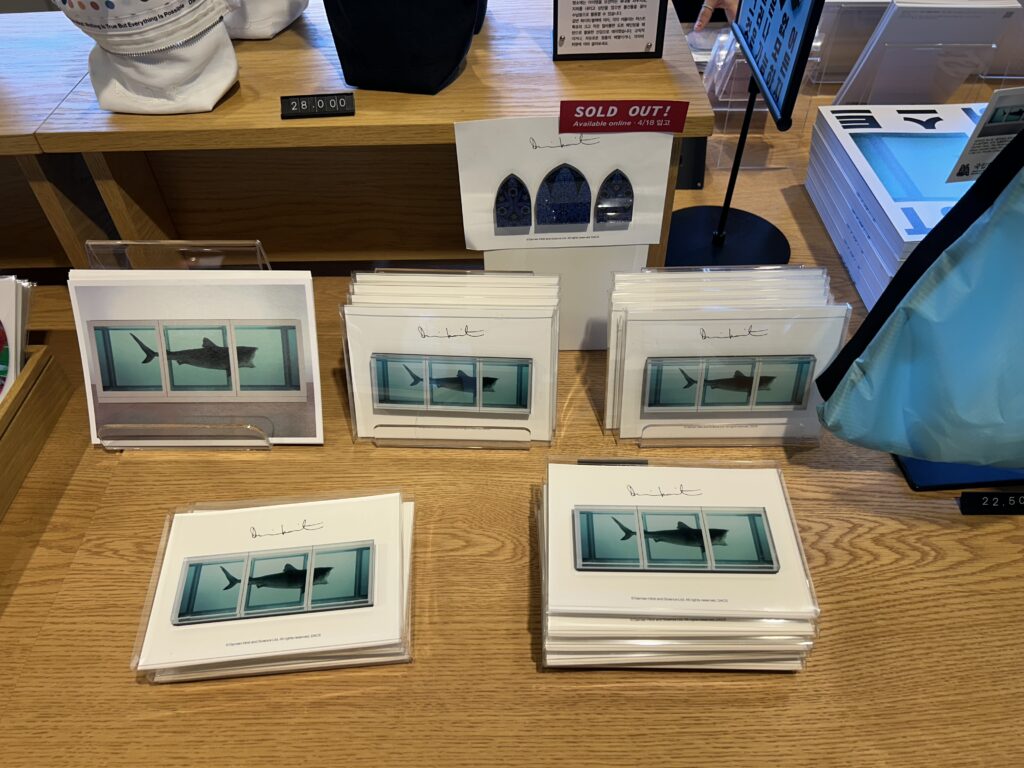
- Don’t Skip the Gift Shop: Once you’ve finished the exhibition, make sure to stop by the museum gift shop. You’ll find a curated selection of sensible merchandise and exclusive collaboration pieces inspired by Damien Hirst’s world. Bringing home a small memento or a unique souvenir is the perfect way to make the memories of this provocative exhibition last even longer.
You Might Also Like:
- Beyond the gallery walls, Seoul is moving fast. We’re diving deep into the 2026 K-Lifestyle—exploring everything from premium wellness to the next generation of K-Culture. Don’t miss the trends that are reshaping the city’s identity right now. [5 Unstoppable South Korea Trends in 2026: From Wellness Wealth to K-Pop’s New Era]
- 20 years in Seoul has taught me that even one street can change everything. Living and working in Gangnam, I’ve navigated the distinct ‘two worlds’ divided by the iconic Teheran-ro. Whether you’re looking for the trendiest cafes or the most prestigious districts, here’s my personal guide to choosing your side. [Gangnam Neighborhood Guide: 3 Key Differences Between Taebuk and Taenam]
- Curating your Seoul shopping bag requires an insider’s eye. Whether it’s the cica creams that save my skin during the morning rush or the premium snacks that power my digital work, these are my personal essentials. Don’t head to the airport without checking this list. [Don’t Leave Seoul Without These: 10+ Olive Young Must-Buys]
- You also might be wondering: How did Korea become the world’s capital of efficiency and speed? From dawn grocery deliveries to lightning-fast medical apps, the same “Palli-Palli” (hurry-hurry) spirit that created these high-performance products is what fuels our daily lives in Seoul. Please check out my previous posting [3Ways Korea’s High-Speed Lifestyle Will Amaze You]
- What about discovering the pinnacle of its culinary world? Check out my curated list of the finest dining experiences in the city [The Stars of 2026 Michelin Guide Seoul & My Personal Best 3]
- You might wonder “what are the hidden rules Koreans live by?” From the red ink myth to why we don’t shake our legs, explore 7 fascinating superstitions that still shape Korean lives today!” Please check out my previous posting on [7 Strange Korean Superstitions Every Homeowner Should Know]
- Understanding these superstitions is just the beginning of discovering the beauty of Korean heritage. For a deeper look into our most celebrated holiday, check out my guide on [Embracing Korean traditions during Seollal]
- Looking for more luxury inspiration in Seoul? Don’t miss my story about a restorative family staycation at the Four Seasons Hotel Seoul. It was the perfect break before the kids started their new school year! More details on [The Ultimate Gwanghwamun Guide: BTS Performance Spot, 4 Must-Try Experiences at Four Seasons Seoul, and MMCA Art]
